Missing a call is normal when you are driving, working safely or already speaking with a customer. The expensive part is not the missed ring itself. It is failing to recognise and follow up a genuine opportunity.
Not every missed call is a lost job
Some calls are suppliers, existing customers or spam. Others are potential customers contacting several businesses in quick succession. The goal is to measure enough information to understand the difference.
A simple way to estimate the opportunity
Start with four numbers:
- How many relevant new-enquiry calls arrive each month?
- How many are missed?
- How many missed callers are successfully contacted later?
- What is the average gross value of a suitable won job?
For example, assume a business receives 40 genuine new-enquiry calls, misses 10 and currently recovers only three. If better follow-up recovers two additional suitable conversations, the commercial value depends on how many become quotes and paying work—not simply the headline value of every call.
Use conservative figures. The purpose is to choose a sensible process, not create a guaranteed revenue claim.
Why customers move quickly
Local service searches often happen when the customer has an immediate problem or wants a quote. If the first business does not answer or acknowledge the call, the customer may move directly to the next result.
What missed-call text-back does
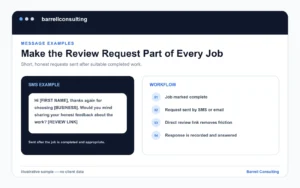
A missed-call workflow can send a prompt message that identifies the business, confirms the call was received and explains that someone will respond. It does not replace returning the call.
Thanks for calling [Business Name]. We could not answer just now, but we have received your call and will get back to you as soon as practical. Reply with your name and the service you need.
Make ownership clear
Technology cannot fix an unclear process. Decide who checks missed calls, how quickly they should respond during business hours and what happens when the first return call is unanswered.
Track the source where practical
A suitable tracking number can help separate calls generated by agreed marketing routes. This is useful when the business wants to compare Google Maps, website or campaign activity.
Tracking must be configured carefully so numbers remain accurate and customer calls route reliably.
Use a simple pipeline
Every new opportunity should have a clear stage, such as New Enquiry, Attempted Contact, Appointment Booked, Quote Sent, Follow-Up Required, Won or Lost. The stages matter only when someone updates them consistently.
Review outcomes, not just call volume
A high call count can include poor-fit jobs. Useful reporting considers contact attempts, suitable enquiries, quotes and known outcomes where the customer uses the system properly.
The Complete Local Lead System can combine call tracking, missed-call acknowledgement, forms, a simple pipeline and follow-up workflows. It does not guarantee that callers answer, accept a quote or become customers.