A steady flow of Google reviews starts with good work and a simple, neutral request process. The aim is not a perfect rating. It is to make it easy for genuine customers to share an honest experience after a completed job.
For Brisbane tradies and local service businesses, reviews can help a prospective customer decide whether to call. They are also public customer feedback, so the process needs to be accurate, respectful and consistent with Google policy.
Ask when the customer has experienced the completed work
The right timing is usually shortly after the job is complete and the customer has had a clear outcome. For a repair, that may be after the work is signed off. For a larger project, choose a sensible completion point rather than sending repeated requests.
Do not use a review request as a substitute for resolving a problem. If a customer has raised an issue, deal with it through the normal service process first. Every suitable completed customer should have the same opportunity to leave an honest review—positive, mixed or negative.
Keep the request neutral and easy
Use the business’s direct Google review link or QR code so the customer does not have to search for the listing. Google allows businesses to ask customers to review them this way. Keep the request short, identify the business and ask for honest feedback. Do not ask for a particular rating or supply copy for the customer to paste.
SMS example
Thanks for choosing [Business Name]. If you have a moment, we’d appreciate an honest Google review about your experience: [review link]
Email example
Subject: Thank you from [Business Name]
Thanks for having us help with [service]. Honest feedback helps other local customers decide who to contact. If you’d like to share your experience, you can leave a Google review here: [review link]
Use these as a starting point, not a script to pressure customers. Only contact people in a way that is appropriate to the relationship and your privacy obligations.
Build a neutral review-request workflow
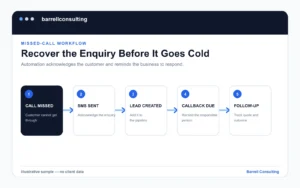
- Mark the job as complete after the customer has received the service.
- Send the same neutral request to suitable completed customers.
- Record that the request was sent, so people are not chased repeatedly.
- Monitor new reviews and respond where a response adds value.
- Use recurring feedback to improve the job process, not just marketing.
A simple system is more useful than an occasional push. The Google Review Growth Kit is designed as a practical starting point for a business that needs an organised request process.
Do not review-gate, incentivise or manufacture feedback
Review gating means asking customers for private feedback first and only directing happy customers to Google. Do not do it. It skews the public feedback process and is not a sound long-term system.
Google’s current guidance also prohibits offering free or discounted goods or services in exchange for customers posting, changing or removing a review. Never buy reviews, write reviews for customers, use staff or friends without a genuine experience, or ask customers to use a particular rating. These tactics can damage trust and may lead to content removal or profile restrictions.
Reply to Google reviews like a business owner
Replies are public. Keep them brief, polite and specific to the customer’s feedback without exposing personal information. A simple thank-you is often enough for a positive review. There is no need to turn every reply into a sales message.
For a negative review
Pause before replying. Check the job record, acknowledge the concern without arguing and offer a private route to resolve it. Do not publish customer details or attack the reviewer. If a review breaches Google’s content rules, it can be reported; a review should not be reported simply because the business dislikes it.
Thanks for raising this. We’re sorry this did not meet your expectations. We’d like to understand what happened and see whether we can help—please contact us on [phone/email] so we can discuss it directly.
Keep the system going
Set an owner for the workflow, keep the review link current, review the process monthly and use a simple record of requests and new feedback. The goal is a fair, ongoing picture of real customer experience—not a short-lived spike.
For help improving how reviews support local visibility, see Review Management. If you want to identify the wider profile, website and Maps priorities first, start with the $49 Google Maps & Local SEO Opportunity Audit.